The Reconstitution Mistake That's Costing You Results
Most people are screwing up peptide reconstitution with basic math errors and wrong BAC water ratios. Here's the step-by-step guide to getting it right every time.
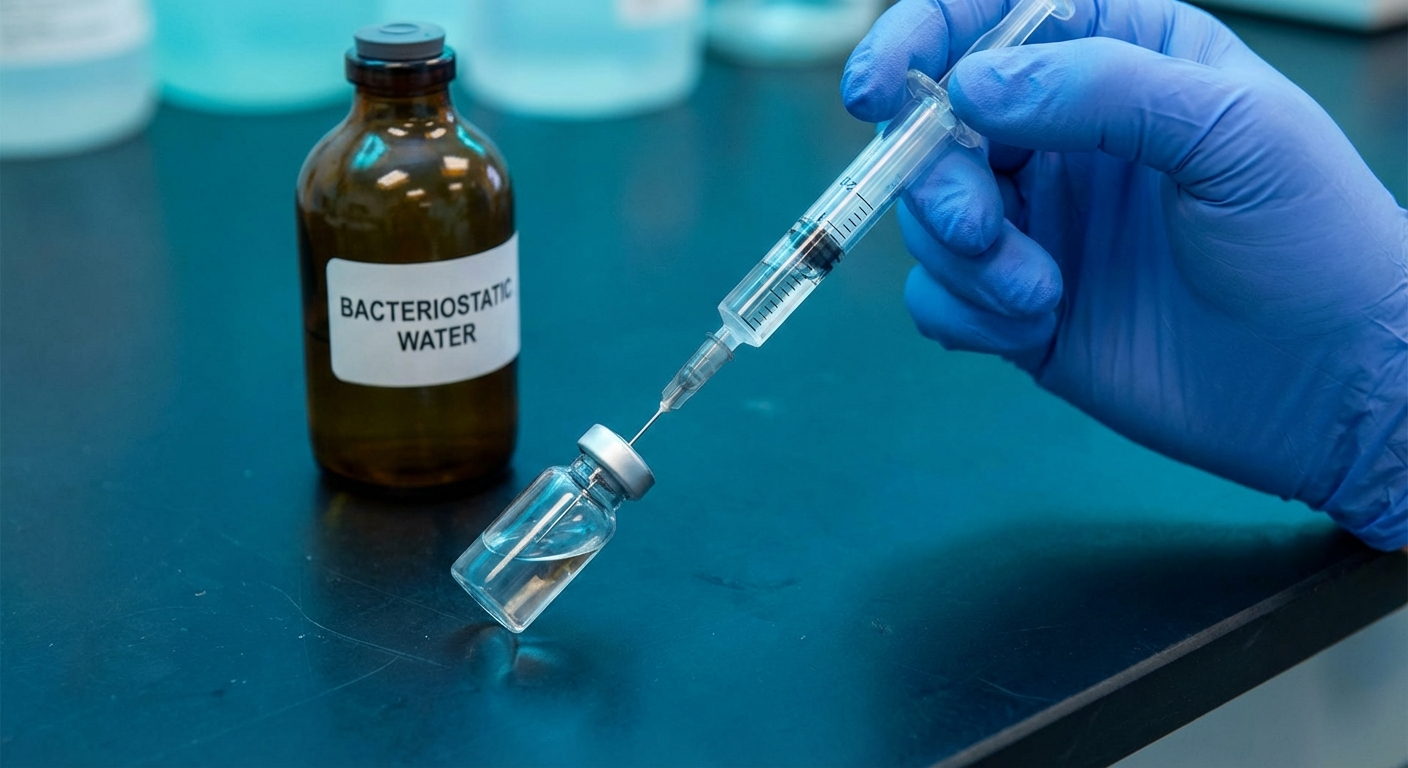
Last week, someone in our Skool community posted a photo of their "reconstituted" BPC-157.
The liquid was cloudy. Chunks floating around. Completely unusable.
"I followed the instructions exactly," they wrote. "What went wrong?"
I took one look at their process and immediately saw three critical errors that would destroy any peptide, regardless of quality.
Reconstitution isn't complicated — but it's precise. Small mistakes lead to big problems. And most people are making the same preventable errors over and over.
The Math Error That Ruins Everything
Here's the most common mistake: people don't understand the relationship between peptide amount, water volume, and final concentration.
The scenario: You have a 5mg vial of BPC-157. You want 250mcg doses. How much water do you add?
Most people guess. Or follow some random forum advice. Or use whatever amount "looks right."
Wrong approach. Here's the actual math:
Step 1: Convert your peptide amount to micrograms
5mg = 5,000 mcg
Step 2: Decide how many doses you want
5,000 mcg ÷ 250 mcg per dose = 20 doses
Step 3: Choose your injection volume preference
Most people prefer 0.25-0.5ml injections
Step 4: Calculate water needed
20 doses × 0.25ml = 5ml of water
OR 20 doses × 0.5ml = 10ml of water
That's it. With 5ml of water, each 0.25ml injection gives you exactly 250mcg. With 10ml, each 0.5ml injection gives you 250mcg.
The mistake most people make: They add random amounts of water, then try to calculate doses backwards. This leads to weird injection volumes and dosing errors.
The BAC Water Quality Problem
Not all bacteriostatic water is created equal.
BAC water is sterile water with 0.9% benzyl alcohol as a preservative. The benzyl alcohol prevents bacterial growth in your reconstituted peptide.
Red flags with BAC water:
- Cloudy appearance (should be crystal clear)
- Unusual smell (should be nearly odorless)
- Expired date (benzyl alcohol degrades over time)
- Improper storage (room temperature for months)
Source quality matters. Cheap BAC water from sketchy vendors can contain impurities that destroy peptides on contact.
Stick with pharmaceutical-grade BAC water from established medical supply companies. Yes, it costs more. No, it's not worth saving $5 to ruin a $50 peptide vial.
The Storage Reality
BAC water should be refrigerated after opening. Room temperature storage degrades the benzyl alcohol preservative, which means bacterial growth becomes possible in your reconstituted peptides.
Unopened BAC water can be stored at room temperature. Opened vials belong in the refrigerator.
The Reconstitution Process (Step-by-Step)
Here's the exact process that prevents 90% of reconstitution failures:
Before You Start
- Let peptide vial reach room temperature (if frozen)
- Ensure BAC water is at room temperature
- Clean work surface with alcohol
- Have alcohol swabs ready
The Injection Technique
Step 1: Draw calculated amount of BAC water into syringe
Step 2: Clean peptide vial rubber stopper with alcohol swab
Step 3: Insert needle into vial at 45-degree angle
Step 4: Inject water slowly down the side of the vial — NOT directly onto the powder
Step 5: Let gravity and gentle swirling do the mixing — NO shaking
Critical point: The water should run down the glass wall, not hit the peptide powder directly. Direct impact can damage delicate peptide structures.
The Mixing Mistake
Never, ever shake a peptide vial.
Peptides are fragile proteins. Aggressive mixing creates shear forces that can break peptide bonds and render the compound useless.
Correct mixing: Gentle swirling or rolling the vial between your palms. If powder doesn't dissolve immediately, wait 10-15 minutes and swirl again.
Signs of proper reconstitution:
- Clear, colorless solution
- No visible particles or chunks
- No foaming or bubbles
- Uniform consistency
If your solution is cloudy, has particles, or looks foamy, something went wrong. Don't use it.
The Syringe Selection Error
Using the wrong syringes creates dosing errors and wastes peptide.
For reconstitution: 3ml syringe with 18-21 gauge needle
Larger volume for accuracy, bigger needle for easy drawing
For injection: 0.3-0.5ml insulin syringe with 30-31 gauge needle
Precise small volumes, comfortable injection
Don't try to reconstitute with an insulin syringe — you can't draw large volumes accurately. Don't inject with a large syringe — you can't measure small volumes precisely.
The Dead Space Problem
Every syringe has "dead space" — volume that can't be injected because it's trapped in the needle hub.
With insulin syringes, dead space is minimal (0.01-0.02ml). With larger syringes, it can be 0.05-0.1ml.
Why this matters: If you're trying to inject 0.25ml but lose 0.05ml to dead space, you're only getting 0.2ml of actual peptide solution — 20% less than intended.
Always account for dead space in your calculations, or switch to low-dead-space syringes.
Storage After Reconstitution
Reconstituted peptides have limited shelf life — much shorter than the dry powder.
Refrigerated storage (2-8°C):
- BPC-157: 4-6 weeks
- TB-500: 3-4 weeks
- Semaglutide: 4 weeks
- Tirzepatide: 4 weeks
Frozen storage (-20°C): Can extend shelf life by 50-100%, but may affect potency
Room temperature: Hours to days, depending on the peptide
Mark your vials with reconstitution date and calculated expiration date. Don't guess on expiration — expired peptides lose potency and can develop harmful byproducts.
Common Troubleshooting Issues
"My peptide won't dissolve completely"
Possible causes:
- Water too cold (let reach room temperature)
- Insufficient mixing time (wait longer, swirl gently)
- Wrong pH (some peptides need pH adjustment)
- Degraded peptide (improper storage before reconstitution)
"The solution turned cloudy after mixing"
Usually indicates:
- Contaminated BAC water
- Too aggressive mixing (protein denaturation)
- Temperature shock (too rapid temperature change)
- Peptide degradation
Cloudy solutions should be discarded. Don't try to salvage them.
"I'm getting inconsistent results with my doses"
Check these factors:
- Syringe accuracy (insulin syringes for small volumes)
- Mixing between draws (peptides can settle)
- Dead space losses
- Storage conditions affecting potency
The Calculation Tool You Need
Stop doing reconstitution math by hand. It's error-prone and time-consuming.
Use the reconstitution calculator at peptidedosing.org. Input your peptide amount, desired dose, and injection volume preference. It calculates water amounts and final concentrations automatically.
The calculator includes:
- Dead space adjustments for different syringe types
- Multiple dosing scenarios
- Storage timeline recommendations
- Troubleshooting guides for common issues
Quality Control Check
After reconstitution, do a visual quality check:
Good reconstitution:
- Crystal clear solution
- No visible particles
- Uniform color (usually colorless)
- No separation or layering
Failed reconstitution:
- Cloudy or milky appearance
- Visible chunks or particles
- Foaming or excessive bubbles
- Color change or precipitation
When in doubt, throw it out. A $50 peptide vial isn't worth the risk of injecting degraded or contaminated solution.
The Bottom Line
Most reconstitution failures come down to basic errors:
- Wrong math on water amounts
- Poor quality BAC water
- Aggressive mixing techniques
- Wrong syringe selection
- Improper storage
Get these basics right, and reconstitution becomes routine. Mess them up, and you're wasting expensive peptides on ineffective solutions.
Take the time to do it right. Measure twice, inject once. Use quality supplies. Follow the process systematically.
Your results depend on it.
The Peptide Daily Brief provides educational content for research purposes only. This is not medical advice. Always consult with a qualified healthcare provider.
Tags
Want More Research Insights?
Get the latest peptide research, industry updates, and expert analysis delivered to your inbox.