The 5 Supplements That Actually Support Peptide Protocols
Skip the 20-supplement stacks. These five foundational compounds create the metabolic environment where peptides work best: magnesium, zinc, vitamin D, omega-3s, and NAC.
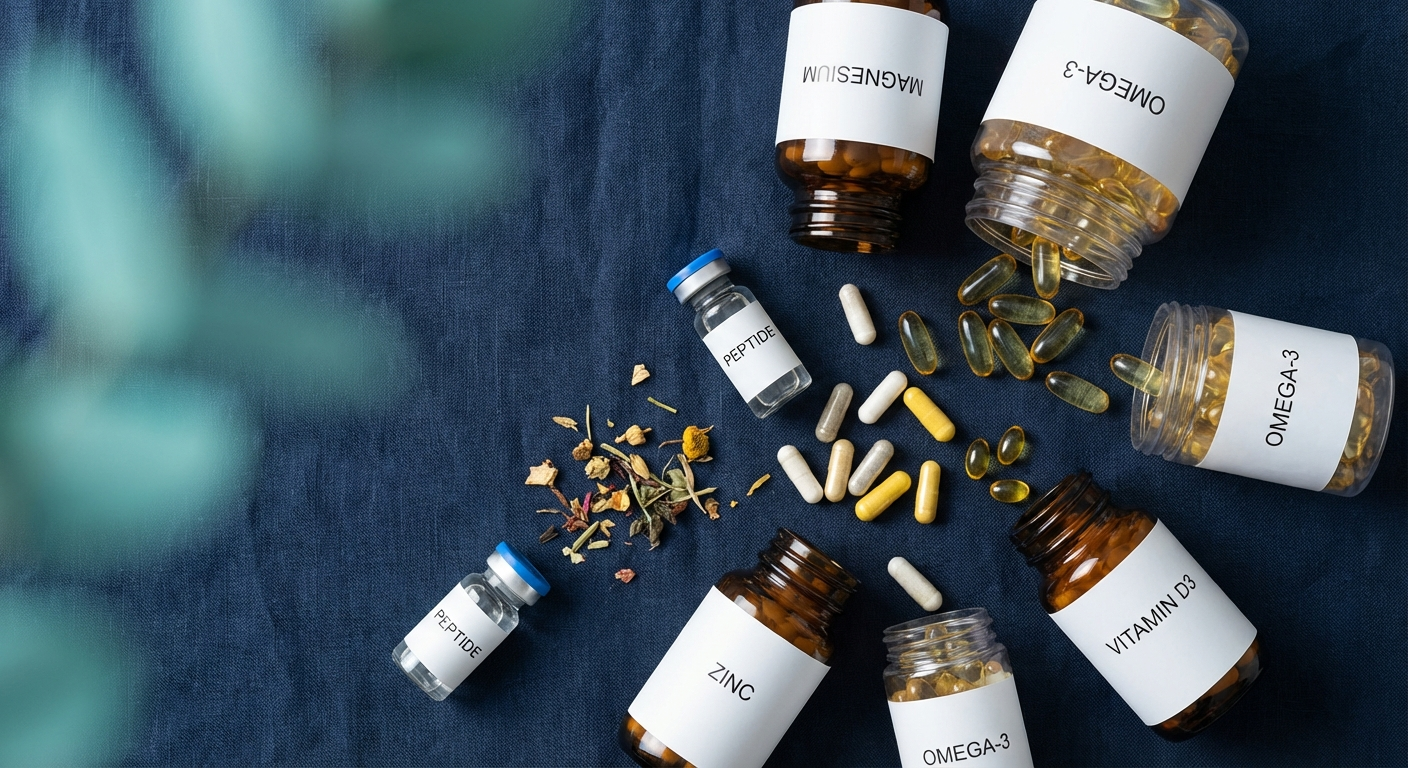
Walk into any supplement store and you'll see walls of bottles promising to "enhance recovery," "boost immune function," and "optimize performance."
Most of it is marketing nonsense.
But when you're running peptide protocols — compounds that cost hundreds of dollars per vial — you want every advantage you can get.
Here's the reality: peptides work better in optimized metabolic environments. Certain nutrient deficiencies can limit peptide effectiveness. And specific compounds can enhance the pathways that peptides target.
After years of tracking what actually moves the needle, I've identified five supplements that consistently improve peptide protocol outcomes.
Not 20. Not 10. Five.
The Foundation Principle
Before diving into specific supplements, understand this: peptides aren't magic bullets that work in metabolically broken bodies.
BPC-157 can't optimize healing if you're severely zinc deficient. Semaglutide won't work optimally if your omega-3 status is terrible. Thymosin Alpha-1 has limited effectiveness if your vitamin D levels are rock bottom.
Peptides amplify existing biological processes. If those processes are compromised by nutrient deficiencies, you get suboptimal results regardless of peptide quality or dosing.
Think of these supplements as infrastructure, not performance enhancers.
Supplement #1: Magnesium — The Master Regulator
Magnesium is involved in over 300 enzymatic reactions. It's required for protein synthesis, cellular energy production, and nervous system function.
Why it matters for peptides:
- Required for peptide receptor binding efficiency
- Critical for cellular energy (ATP) production
- Involved in protein synthesis pathways
- Essential for muscle and nerve function
Most people are magnesium deficient without knowing it. Stress depletes magnesium. Exercise depletes magnesium. Poor diet provides insufficient magnesium.
Dosing: 400-600mg elemental magnesium daily
Form matters: Magnesium glycinate for general use, magnesium malate for energy/muscle function, magnesium threonate for cognitive applications.
Avoid magnesium oxide — it's poorly absorbed and mainly works as a laxative.
The Peptide Connection
For healing peptides like BPC-157 and TB-500: Magnesium is required for collagen synthesis and tissue repair processes.
For metabolic peptides like semaglutide: Magnesium affects insulin sensitivity and glucose metabolism.
For immune peptides like TA-1: Magnesium is essential for immune cell activation and cytokine production.
Supplement #2: Zinc — The Healing Catalyst
Zinc is the most underappreciated mineral for anyone using healing peptides.
Why zinc is crucial:
- Required for over 100 enzymatic reactions
- Essential for wound healing and tissue repair
- Critical for immune function and inflammation regulation
- Involved in protein synthesis and cellular division
Even mild zinc deficiency significantly impairs healing processes. If you're using BPC-157, TB-500, or any healing-focused peptide while zinc deficient, you're wasting money.
Dosing: 15-30mg elemental zinc daily (with food to avoid nausea)
Form recommendations: Zinc picolinate or zinc bisglycinate for optimal absorption
Timing: Take away from other minerals that compete for absorption (iron, copper, calcium)
The Copper Balance Issue
Long-term zinc supplementation can deplete copper levels. If you're supplementing zinc for more than 3-6 months, consider adding 1-2mg of copper or cycling off zinc periodically.
Supplement #3: Vitamin D — The Hormone Optimizer
Vitamin D isn't really a vitamin — it's a hormone precursor that affects nearly every body system.
Peptide-relevant functions:
- Immune system modulation (crucial for TA-1 and immune protocols)
- Inflammation regulation
- Muscle protein synthesis
- Bone health and mineral metabolism
- Insulin sensitivity
Most people have suboptimal vitamin D levels, especially those living in northern climates or spending limited time outdoors.
Target range: 40-60 ng/mL (100-150 nmol/L)
Dosing: Highly individual, typically 2000-5000 IU daily
Testing: Get 25-hydroxyvitamin D tested before starting supplementation and every 6 months thereafter
The Cofactor Requirements
Vitamin D works best with cofactors:
- Vitamin K2: 100-200 mcg daily (directs calcium to bones, not arteries)
- Magnesium: Required for vitamin D metabolism
Taking vitamin D alone without cofactors can create imbalances.
Supplement #4: Omega-3 Fatty Acids — The Inflammation Modulators
Omega-3s provide the raw materials for resolvin and protectin synthesis — compounds that actively resolve inflammation and promote healing.
Why they're essential for peptide protocols:
- Provide building blocks for anti-inflammatory mediators
- Improve cell membrane fluidity and receptor function
- Support cardiovascular and brain health
- Enhance insulin sensitivity
Most people have terrible omega-3 to omega-6 ratios. The standard American diet is pro-inflammatory, which works against peptide-mediated healing processes.
Dosing: 2-3g combined EPA/DHA daily
Form: Fish oil, krill oil, or algae oil (for vegetarians)
Quality matters: Look for third-party testing for heavy metals and rancidity
The Ratio Reality
More important than absolute omega-3 intake is the omega-6 to omega-3 ratio. Ideally 4:1 or lower, but most people are running 15:1 or higher.
Consider reducing omega-6 intake (vegetable oils, processed foods) while increasing omega-3s.
Supplement #5: N-Acetylcysteine (NAC) — The Cellular Protector
NAC is a precursor to glutathione, your body's master antioxidant. It also has direct effects on cellular protection and recovery.
Mechanisms relevant to peptides:
- Glutathione production and recycling
- Cellular protection from oxidative stress
- Mucus thinning (beneficial for respiratory health)
- Liver detoxification support
- Potential neuroprotective effects
NAC is particularly valuable for people using multiple compounds or running extended protocols. It provides cellular protection during periods of increased metabolic demand.
Dosing: 600-1200mg daily
Timing: Away from meals for optimal absorption
Quality note: NAC has a sulfur smell — this is normal and indicates product freshness
The FDA Controversy
The FDA has attempted to restrict NAC as a supplement, claiming it's a drug. Most reputable supplement companies continue to sell it, but availability may become an issue in the future.
What About Everything Else?
These five supplements address the most common deficiencies that limit peptide effectiveness. But what about all the other supplements people recommend?
Potentially Useful (But Not Essential)
Vitamin C: Supports collagen synthesis, but most people get adequate amounts from diet
Creatine: Enhances cellular energy, particularly beneficial for muscle-building peptides
Curcumin: Anti-inflammatory, but effects are modest and bioavailability is problematic
Probably Unnecessary
Exotic antioxidants: Resveratrol, quercetin, etc. — limited evidence for synergy with peptides
Amino acid supplements: Unless you have severe dietary restrictions, whole food protein is superior
Herbal complexes: Too many variables, unclear interactions with peptides
The Integration Strategy
Don't start all five supplements simultaneously with your peptide protocol. That creates too many variables.
Recommended approach:
Week 1-2: Establish peptide baseline (as covered in previous articles)
Week 3: Add magnesium and vitamin D (if deficient)
Week 5: Add zinc and omega-3s
Week 7: Consider NAC if running multiple compounds
This staggered approach lets you evaluate each addition's impact on your protocol.
Testing and Monitoring
Supplement blindly and you're guessing. Test key markers to verify status:
Essential tests:
- 25-hydroxyvitamin D
- RBC magnesium (more accurate than serum)
- Zinc (serum or RBC)
- Omega-3 index or fatty acid profile
Optional but useful:
- Glutathione (for NAC effectiveness)
- hsCRP (inflammation marker)
- Complete metabolic panel
Cost-Benefit Analysis
Quality supplements aren't cheap, but they're orders of magnitude less expensive than peptides.
Monthly supplement costs: $50-80 for all five
Monthly peptide costs: $200-800+ depending on protocols
If supplements improve peptide effectiveness by even 10-20%, they pay for themselves immediately.
The N1 Wellness Connection
These five supplements form the foundation of the N1 Wellness protocol optimization approach. They address the most common nutrient gaps that limit peptide effectiveness.
For people serious about optimizing their health and performance, addressing these basics isn't optional — it's foundational.
Check out N1 Wellness for comprehensive protocols that integrate peptide research with foundational optimization strategies.
The Bottom Line
Peptides work better in optimized bodies. These five supplements create the metabolic environment where peptides can function optimally.
The hierarchy:
- Fix obvious deficiencies first
- Add peptides to optimized foundation
- Track and adjust based on results
- Resist the urge to add random supplements
Keep it simple. Focus on what actually matters. Let the peptides do what they're designed to do in a body that's prepared for them to work.
Want personalized supplement recommendations based on your specific peptide protocols? Join our Skool community where members share optimization strategies and real-world results.
The Peptide Daily Brief provides educational content for research purposes only. This is not medical advice. Always consult with a qualified healthcare provider.
Tags
Want More Research Insights?
Get the latest peptide research, industry updates, and expert analysis delivered to your inbox.