The Gray Market Isn't Going Away — Here's How to Navigate It
FDA reclassification is coming, but the gray market will adapt and survive. Here's your practical guide to vetting vendors, reading CoAs, and avoiding the biggest red flags in peptide sourcing.

Let's cut through the noise: the FDA's peptide reclassification isn't going to kill the gray market.
It's going to make it more careful. More selective. And unfortunately, more expensive.
The idea that regulatory pressure will somehow eliminate peptide research compounds is naive. We've seen this movie before with SARMs, nootropics, and every other compound that threatens pharmaceutical profits.
The gray market adapts. It doesn't disappear.
So instead of pretending this space is going away, let me give you the tools to navigate it intelligently.
The New Gray Market Reality
The FDA's October 2023 guidance changed everything — and nothing.
Major vendors scrambled to restructure. Some shut down peptide operations entirely. Others moved manufacturing overseas. A few pivoted to "research chemical" classifications.
But here's what actually happened: the irresponsible vendors got scared and left. The professional operations adapted their compliance strategies.
This is actually good for consumers.
The fly-by-night operations selling mystery powders from Chinese labs? Gone. The vendors who never bothered with third-party testing? Scared away.
What's left is a smaller, more professional market that takes quality control seriously — because they have to.
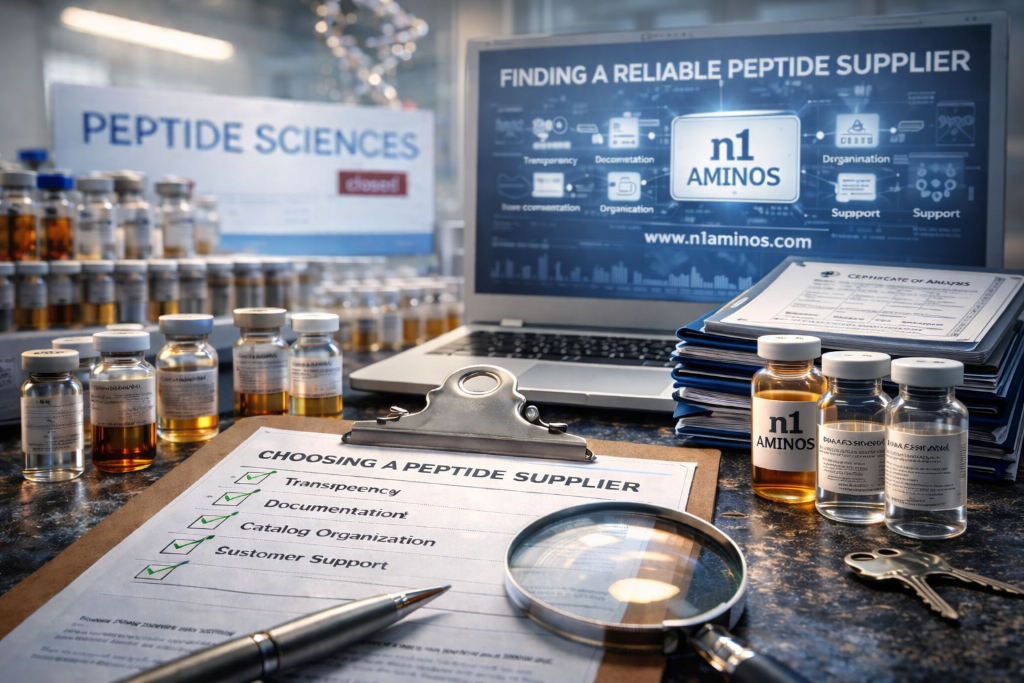
How to Vet Vendors (The Real Criteria)
Forget the Reddit recommendations. Ignore the influencer discount codes. Here's how you actually evaluate a peptide vendor:
1. Manufacturing Transparency
Red flag: "Manufactured in an FDA-registered facility" with no specifics.
Green flag: Specific facility names, locations, and certifications. Bonus points if they mention GMP compliance standards.
Real vendors know exactly where their peptides come from. Mystery vendors use vague language because they're buying from whoever's cheapest that week.
2. Testing Protocol Depth
Every vendor claims "third-party testing." Most are lying.
What to look for:
- Specific testing lab names (not just "accredited laboratory")
- Multiple test types: purity, identity, endotoxin, heavy metals
- Batch-specific CoAs (not generic template reports)
- Testing dates that match production dates
If they can't provide the testing lab's name, they're not actually third-party testing. They're either testing in-house or not testing at all.
3. Customer Service Competence
Email their support with technical questions. Real peptide vendors have staff who understand the products they're selling.
Test questions:
- "What's the difference between acetate and arginate salt forms?"
- "How should I store reconstituted peptides?"
- "Can you explain your lyophilization process?"
If you get copy-paste responses or "consult your doctor" deflections, move on.
Reading CoAs Like a Pro
Certificates of Analysis are your best friend — when you know how to read them.
Most people look at purity percentages and call it good. That's amateur hour.
Identity Confirmation
Purity means nothing if they're testing the wrong compound.
Look for mass spectrometry (MS) results that confirm molecular weight. HPLC alone can't confirm identity — it only measures relative purity.
If the CoA doesn't include MS data, you have no idea what you're actually buying.
Endotoxin Testing
This is where most vendors cheap out, and it's where you can get seriously hurt.
Endotoxins are bacterial toxins that can cause fever, inflammation, and immune responses. Proper peptide manufacturing requires endotoxin testing.
Acceptable levels: <10 EU/mg for most peptides
Red flag: No endotoxin data on the CoA
Green flag: LAL (Limulus Amebocyte Lysate) test results clearly displayed
Heavy Metal Screening
Lead, mercury, cadmium — these accumulate in your body over time. Proper manufacturing includes heavy metal testing.
If the CoA doesn't mention heavy metals, assume they're not testing for them.
The Price Reality Check
Quality peptides aren't cheap. If you're finding significantly better prices than established vendors, there's a reason.
Ballpark pricing for common peptides (as of early 2026):
- BPC-157 (5mg): $35-55
- TB-500 (5mg): $45-65
- Semaglutide (5mg): $85-120
- Tirzepatide (10mg): $150-200
Prices 30-40% below these ranges? You're either getting inferior product or dealing with someone who's cutting corners somewhere.
Remember: synthesis costs are fixed. Raw materials cost what they cost. If someone's dramatically cheaper, they're either operating at a loss (unsustainable) or using inferior processes.
The Shipping and Storage Test
Here's a simple test most people overlook: how does your vendor ship peptides?
Red flags:
- Room temperature shipping in summer
- No temperature monitoring
- Generic packaging with no cold storage indicators
Green flags:
- Cold packs or dry ice for temperature-sensitive peptides
- Temperature monitoring strips
- Proper insulation for multi-day transit
Peptides degrade with heat exposure. Vendors who don't protect products during shipping don't understand what they're selling.
The Legal Position You Need to Understand
Let me be crystal clear about something: purchasing research peptides for personal use exists in a legal gray area.
Vendors can sell them for "research purposes only." You can buy them for "research purposes only." What happens after that is between you and your risk tolerance.
The FDA regulates the marketing and sale of these compounds, not personal possession for research purposes.
But understand this: the regulatory environment is tightening. Vendors are becoming more selective about customers. Some require institutional affiliations. Others are implementing more stringent age verification.
This isn't going to get easier or cheaper.
Building Vendor Relationships
The best vendors prioritize customers who demonstrate knowledge and responsibility.
Ways to build credibility:
- Ask intelligent questions about products
- Request detailed CoAs before purchasing
- Provide feedback on product quality
- Make consistent, reasonable orders
Vendors want customers who understand what they're buying and why. They don't want liability risks from people treating research compounds like recreational drugs.
The Bottom Line
The gray market isn't disappearing — it's professionalizing.
The days of buying mystery peptides from random websites are ending. What's emerging is a more sophisticated market that requires more sophisticated consumers.
Adapt or get left behind.
Learn to read CoAs. Understand manufacturing standards. Build relationships with quality vendors. And accept that quality costs more than you might want to pay.
The alternative is rolling the dice with your health on substandard products from sketchy sources.
Your choice.
Want to stay updated on vendor quality and regulatory changes? Join our Skool community where members share real experiences and vendor evaluations.
The Peptide Daily Brief provides educational content for research purposes only. This is not medical advice. Always consult with a qualified healthcare provider.
Tags
Want More Research Insights?
Get the latest peptide research, industry updates, and expert analysis delivered to your inbox.