How to Choose a Peptide Supplier After a Major Shutdown
The shutdown of Peptide Sciences has forced many researchers to reconsider how they evaluate peptide suppliers. This guide explains the key signals that indicate supplier reliability and how buyers can make more informed sourcing decisions moving forward.
How to Choose a Peptide Supplier After a Major Shutdown
The recent shutdown of Peptide Sciences has forced many researchers to rethink how they evaluate peptide suppliers.
For years, many buyers relied on familiar vendors that appeared stable and well established. When a company with strong name recognition suddenly exits the market, it exposes an uncomfortable reality:
Supplier stability is never guaranteed.
For researchers running multi-week or multi-month protocols, this can create significant disruption. Experiments depend on consistency, and losing access to a trusted supplier mid-protocol can force researchers to scramble for alternatives.
Because of this, the shutdown has prompted a broader conversation within the peptide community about how suppliers should actually be evaluated.
Rather than simply looking for a replacement vendor, researchers are beginning to ask a more important question:
What makes a peptide supplier reliable in the first place?
Start With Supplier Transparency
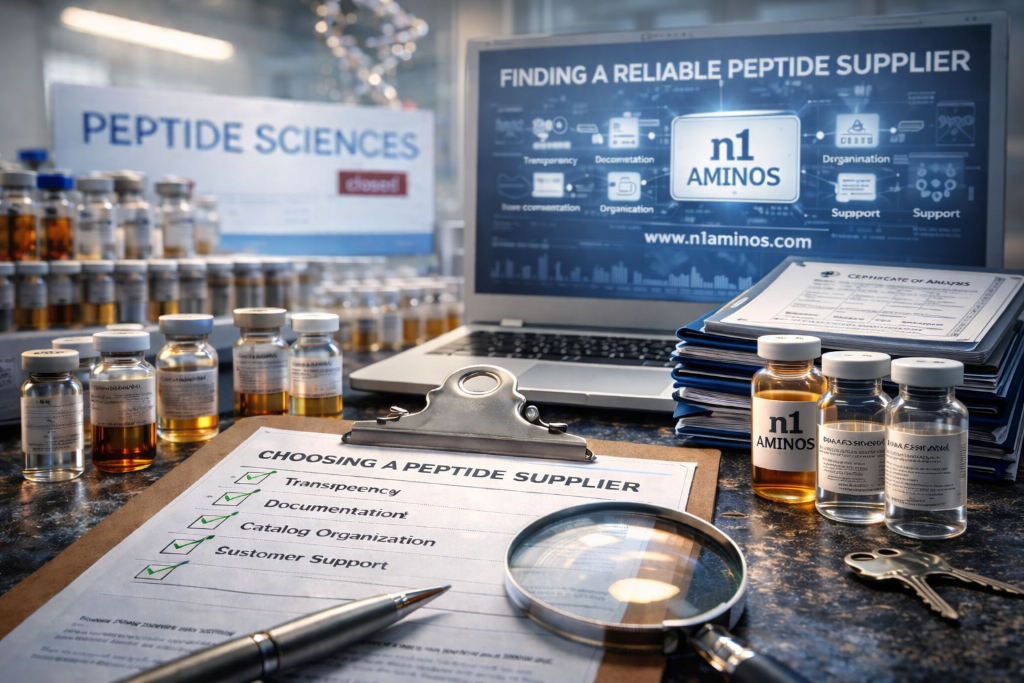
Transparency is one of the clearest indicators of operational maturity. A supplier that communicates clearly about its products, policies, and processes is far easier to evaluate than one that provides minimal information.
When reviewing a new supplier, researchers often look for signs such as:
• clearly organized product pages
• visible documentation or supporting information
• contact information and support channels
• consistent messaging across the website
Transparency alone does not guarantee quality, but it does signal that the company is willing to be open about how it operates.
Look for Organized Documentation
In any research environment, documentation is essential.
Suppliers that maintain organized documentation demonstrate a higher level of internal structure and operational discipline.
Researchers frequently check whether a supplier maintains documentation such as:
• Certificates of Analysis
• endotoxin reports
• storage guidance
• batch or testing information
Well-organized documentation helps researchers better understand the materials they are working with and adds an additional layer of accountability to the supply chain.
Evaluate Catalog Structure
Another important factor is the structure of the supplier’s catalog.
Some vendors attempt to list hundreds of compounds with little explanation or organization. Others maintain smaller, more curated catalogs that appear intentionally structured.
When evaluating a supplier, researchers often ask:
• Does the catalog appear actively maintained?
• Are the products presented clearly and consistently?
• Does the site appear organized or chaotic?
A structured catalog often reflects a company that understands its customers and intends to support them over the long term.
Test Customer Support Responsiveness
Customer support may be one of the most overlooked indicators of supplier reliability. Before placing an order, many experienced buyers will reach out with simple questions. The goal is not only to get an answer but to see how the company responds.
Researchers often evaluate:
• response time
• clarity of answers
• professionalism of communication
If a supplier is difficult to reach before a purchase, it may signal potential difficulties later on.
Watch for Signs of Operational Stability
When a major vendor disappears, it highlights the importance of operational continuity. Buyers increasingly look for signals that a company is actively maintaining its operations.
These signals might include:
• consistent updates or communication
• a stable website and ordering system
• clear support channels
• visible effort in maintaining documentation and product listings
While no company is immune to change, these signals can provide helpful insight into how a business operates behind the scenes.
Where Researchers Are Looking Now
Following the Peptide Sciences shutdown, many researchers have begun exploring alternative suppliers that appear stable and transparent in their operations. Some buyers have started reviewing suppliers such as n1 Aminos, which provides additional context around the shutdown and resources for researchers navigating the transition.
Readers interested in learning more about the Peptide Sciences shutdown can review additional information here:
https://www.n1aminos.com/peptide-sciences-shutdown/
For those exploring possible replacement suppliers, a breakdown of alternatives can be found here:
https://www.n1aminos.com/peptide-sciences-alternative/
Researchers can also browse available inventory directly here:
https://www.n1aminos.com/store/single-vial
Turning Disruption Into Better Standards
Market disruptions can be frustrating, but they often lead to improvements in how industries operate. When researchers become more thoughtful about how they evaluate suppliers, it encourages companies to improve their communication, documentation, and operational practices.
Over time, these expectations help strengthen the entire ecosystem.
The Bottom Line
The shutdown of Peptide Sciences serves as a reminder that supplier choice matters more than many researchers initially realize.
Rather than simply replacing one vendor with another, this moment provides an opportunity to evaluate suppliers more carefully.
By focusing on transparency, documentation standards, catalog organization, and customer support responsiveness, researchers can make more informed decisions about where they source their materials.
And as the peptide research market continues to evolve, these standards will likely become even more important.
Tags
Want More Research Insights?
Get the latest peptide research, industry updates, and expert analysis delivered to your inbox.