The RFK Jr. Peptide Reversal — And the Curious Timing of the Peptide Sciences Shutdown
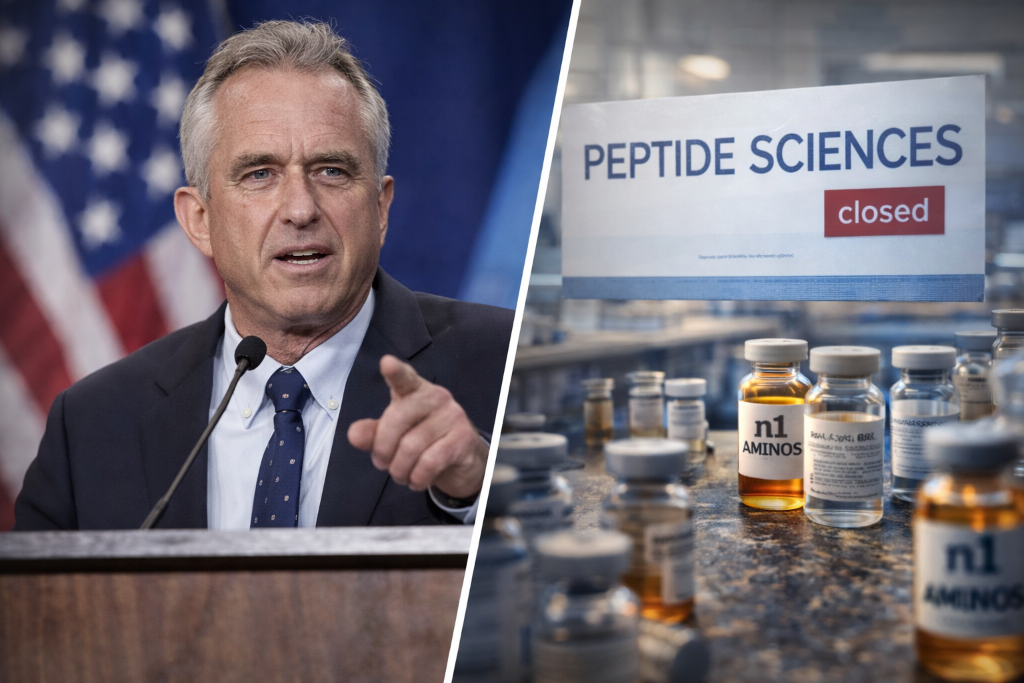
RFK Jr. recently signaled that several peptides previously restricted by the FDA may soon return to legal compounding, while at nearly the same time one of the largest research peptide suppliers, Peptide Sciences, announced it was shutting down. This article explores the unusual timing of these two events and what they may signal about the future of the peptide market.
The RFK Jr. Peptide Reversal — And the Curious Timing of the Peptide Sciences Shutdown
Over the past few weeks, the peptide industry has experienced two developments that, on the surface, appear unrelated.
First, U.S. Health and Human Services Secretary Robert F. Kennedy Jr. announced that the federal government is considering loosening restrictions on a group of peptides previously restricted by the FDA.
Second, one of the most recognizable suppliers in the research peptide market — Peptide Sciences — announced that it was voluntarily shutting down operations.
Individually, each event is significant.
Taken together, the timing raises an interesting question:
Could these two developments actually be connected?
RFK Jr.’s Announcement About Previously Restricted Peptides
During a recent appearance on The Joe Rogan Experience, Kennedy discussed the FDA’s earlier crackdown on peptide compounding and signaled that the agency may soon reverse course on several of those restrictions.
The FDA had previously placed 19 peptides on its Category 2 bulk drug substances list, a classification that effectively prevented traditional compounding pharmacies from preparing them.
Kennedy indicated that the agency is now reviewing that decision and that roughly 14 of those peptides could be moved back into a category that allows compounding pharmacies to produce them under physician supervision.
Among the peptides widely discussed as part of this shift are compounds frequently referenced in longevity and recovery research circles, including:
• BPC-157
• Thymosin Alpha-1
• TB-500 (Thymosin Beta-4 fragment)
• AOD-9604
• GHK-Cu
• several growth-hormone-related peptides
These compounds were originally restricted by the FDA in 2023 due to concerns about insufficient human safety data and the lack of formal drug approval pathways.
Kennedy’s argument is that removing them from legal compounding pushed demand toward unregulated gray-market suppliers rather than improving patient safety.
The Gray Market That Emerged
When compounding pharmacies lost the ability to produce these peptides, demand did not disappear.
Instead, a large portion of the market shifted toward companies selling peptides labeled “research use only.”
These suppliers exist in a regulatory gray zone:
• they do not sell products intended for human use
• they avoid medical claims
• their products are marketed for laboratory research
However, the practical reality is that many consumers began turning to these vendors after the compounding restrictions took effect.
This dynamic created an unusual market situation where regulated medical channels were restricted while gray-market supply expanded.
Industry observers have noted that the growth of research-peptide suppliers accelerated significantly after the FDA’s compounding restrictions were introduced.
The Sudden Shutdown of Peptide Sciences
That brings us to the second development.
Peptide Sciences, long considered one of the most recognizable names in the research-peptide retail market, recently announced that it was voluntarily discontinuing operations and ceasing sales of its research products.
The company’s announcement offered little explanation beyond thanking customers and confirming the closure.
Because of the company’s size and reputation in the space, the shutdown immediately sparked discussion across biohacking communities and research forums.
Additional details surrounding the shutdown have been documented here:
https://www.n1aminos.com/peptide-sciences-shutdown/
Given how established the company appeared, the timing of the closure surprised many observers.
And that timing is what makes the situation particularly interesting.
Why Policy Changes Could Reshape the Market
If Kennedy’s proposal moves forward and compounding pharmacies regain the ability to legally produce many of these peptides, the market could shift dramatically.
Instead of sourcing compounds through research-only vendors, patients and clinicians may once again obtain them through prescription channels from licensed pharmacies.
That would create several possible effects.
1. Medical access returns to regulated pharmacies
Licensed pharmacies would regain the ability to prepare peptides under physician supervision.
2. Gray-market demand could shrink
If patients can obtain peptides legally through healthcare providers, fewer people may rely on research-only suppliers.
3. Regulatory scrutiny could increase
Once peptides re-enter the regulated medical system, federal agencies may begin paying closer attention to companies operating in adjacent markets.
Could This Explain the Timing?
There is no public statement directly connecting the two developments. However, it is not unreasonable to consider the possibility that policy signals can influence business decisions.
Companies operating in gray-market or semi-regulated industries often pay very close attention to regulatory shifts.
If the market begins transitioning back toward physician-controlled distribution through compounding pharmacies, some research-only suppliers may decide that the long-term business environment is changing.
Whether that played a role in this case remains unknown. But the coincidence in timing has certainly caught the attention of industry observers.
For researchers evaluating replacement suppliers, additional information on possible alternatives can be found here:
https://www.n1aminos.com/peptide-sciences-alternative/
What Actually Happens Next
One important detail is often overlooked in the current discussion.
Kennedy’s announcement itself does not automatically change FDA policy.
Regulatory changes must still move through the formal rulemaking process, and the FDA has not yet issued a finalized update to the peptide compounding lists.
In other words:
• The policy shift is being discussed
• But the final regulatory outcome is still developing
For the peptide industry, that means the next several months could bring significant changes.
The Bottom Line
The peptide market appears to be entering a period of rapid transition.
On one side, the federal government is reconsidering restrictions on several widely used peptides.
On the other, one of the largest research-peptide suppliers has unexpectedly exited the market.
Whether those two developments are directly related remains unclear.
But together they signal something important:
The peptide industry is evolving — and the rules that shape it may be changing faster than many companies anticipated.
Tags
Want More Research Insights?
Get the latest peptide research, industry updates, and expert analysis delivered to your inbox.