What Happened to Peptide Sciences?
Peptide Sciences was one of the most recognizable suppliers in the research peptide market, so its recent shutdown has left many researchers asking what happened. This article breaks down the official statement, the industry context, and what the closure means for buyers evaluating their next supplier.
What Happened to Peptide Sciences?
Over the past few years, Peptide Sciences became one of the most recognizable names in the research peptide space.
For many researchers, biohackers, and protocol builders, it was often the first vendor they encountered when searching for compounds used in experimental stacks and research protocols.
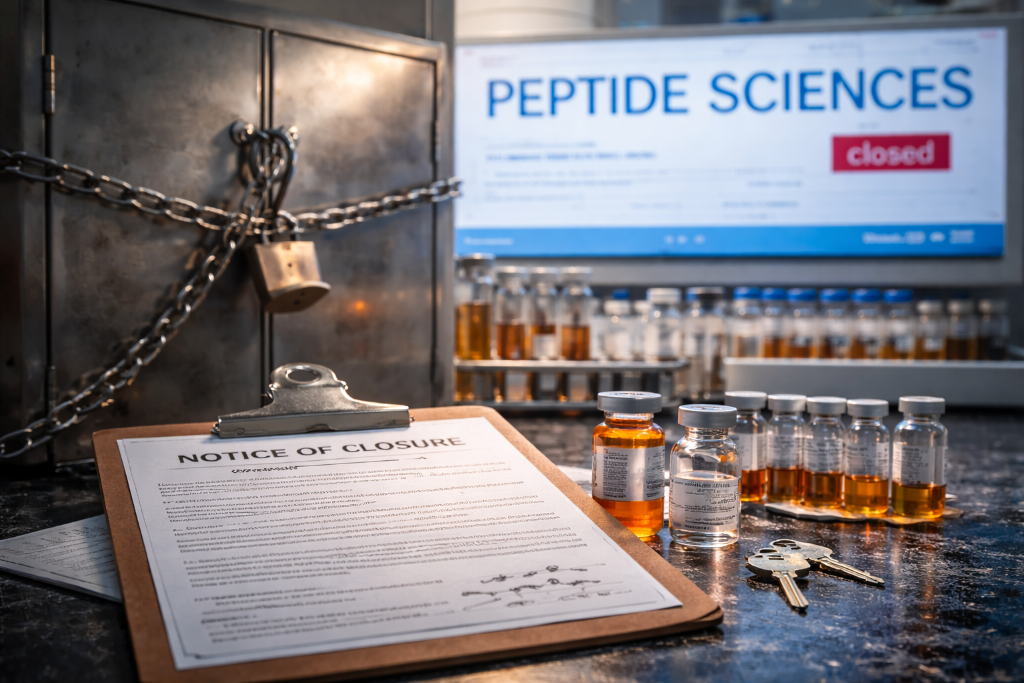
So when the company recently posted a notice stating it had voluntarily shut down operations and discontinued the sale of its research products, it immediately raised questions across the community.
The biggest one being simple:
What actually happened to Peptide Sciences?
The Official Statement
As of the time of writing, the homepage for Peptide Sciences contains a message stating that the company has made the decision to shut down operations after careful consideration.
The notice thanks customers for their support and confirms that the company is discontinuing the sale of research products.
What the announcement does not include is a detailed explanation for the shutdown.
There is no public breakdown of the factors that led to the decision, and the message itself remains relatively brief. Because of that, much of the discussion happening in online communities right now is speculation.
Why the Shutdown Matters
Peptide Sciences was not just another small vendor.
It had built significant brand recognition in a niche market where trust signals matter heavily.
For many buyers, the company represented something important: perceived stability.
When a company that appears well-established suddenly exits the market, it forces people to reconsider how they evaluate suppliers in the first place. And that conversation is now happening across forums, groups, and communities focused on peptide research.
Possible Factors Behind the Closure
Without a detailed statement from the company, it is impossible to know the exact reasons behind the shutdown. However, several broader trends in the research peptide market may have contributed to the environment in which the decision occurred.
These include:
• increasing regulatory scrutiny across the peptide market
• growing attention on research compounds connected to metabolic drugs
• payment processing and banking pressures faced by companies in gray-area industries
• rising competition from newer vendors entering the space
It’s important to note that these are industry-wide dynamics, not confirmed explanations for the company’s closure.
Until additional information emerges, the official notice remains the only confirmed source of information.
The Immediate Impact on Buyers
For researchers who had relied on Peptide Sciences, the shutdown creates an immediate practical problem:
Where do you go next?
Many buyers had developed familiarity with the company’s catalog and ordering process. When that source disappears, the transition to a new supplier often requires careful evaluation.
Questions that buyers are now asking include:
• Which suppliers appear stable and communicative?
• Which companies maintain organized documentation standards?
• Which vendors appear actively maintained and responsive?
In other words, the shutdown is pushing many people to re-evaluate the signals they use to judge supplier reliability.
Evaluating Alternatives Carefully
Whenever a well-known vendor exits a market, the next phase usually involves a surge of new companies attempting to fill the gap.
That makes careful evaluation even more important.
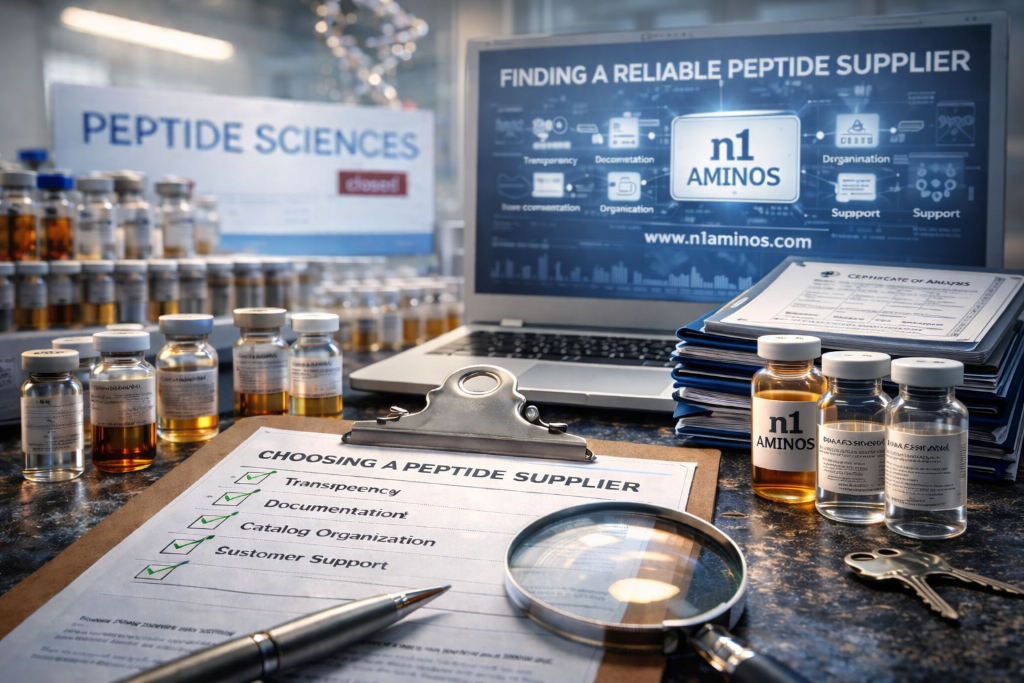
Buyers should look for signals such as:
• clear product presentation
• transparent communication
• organized documentation standards
• responsive customer support
• a catalog that appears intentionally built rather than randomly assembled
For readers looking for a deeper breakdown of the Peptide Sciences shutdown itself, one overview can be found here:
https://www.n1aminos.com/peptide-sciences-shutdown/
And for those researching possible replacement suppliers, an overview of alternatives to Peptide Sciences is available here:
https://www.n1aminos.com/peptide-sciences-alternative/
A Market Still Finding Its Structure
The research peptide ecosystem has grown rapidly over the past decade. Interest in experimental compounds related to metabolism, recovery, longevity, and performance has expanded across multiple communities.
But the infrastructure supporting that interest is still evolving.
Companies are experimenting with new approaches to:
• supply chains
• documentation practices
• protocol tracking tools
• educational resources for researchers
The shutdown of a large vendor is a reminder that the market is still developing — and that long-term stability is something buyers increasingly value.
A Reminder for Researchers
Events like this highlight why researchers benefit from treating experimentation as a structured process rather than a series of one-off purchases.
Keeping track of protocols, documenting variables, and carefully evaluating suppliers all help reduce disruption when something unexpected happens.
The researchers who adapt the fastest are usually the ones who have already built systems around how they run and track their experiments.
Where the Market Goes Next
The disappearance of a large vendor does not mean the research peptide market disappears with it. In fact, it often leads to a period of reshuffling where newer companies step forward to fill the demand left behind.
Some buyers are already exploring suppliers such as n1 Aminos, which maintains information about its catalog and available products here:
Researchers interested in browsing current inventory options can also review available single-vial listings here:
https://www.n1aminos.com/store/single-vial
The Bottom Line
The shutdown of Peptide Sciences has left many researchers asking what happened and what comes next.
At the moment, the company’s public statement confirms only one thing with certainty:
operations have been voluntarily discontinued.
Beyond that, the event serves as a reminder that the research peptide ecosystem is still evolving — and that stability, transparency, and continuity are becoming the most important signals buyers look for when choosing where to source their research materials.
Tags
Want More Research Insights?
Get the latest peptide research, industry updates, and expert analysis delivered to your inbox.